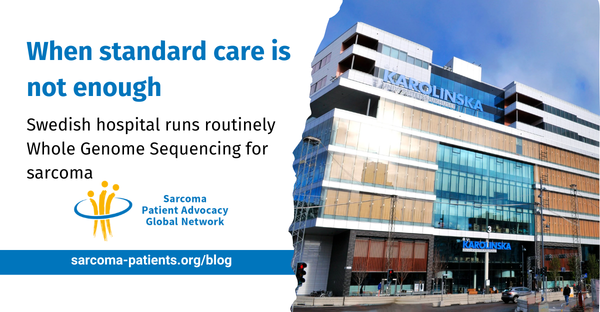
In this article, Magnus explains that sarcoma diagnosis is often complex and that incorrect or incomplete diagnosis can lead to ineffective or unnecessary treatment. Whole Genome Sequencing maps the tumour’s entire genome to identify genetic alterations that determine tumour behaviour and possible treatments.
Key points from the article:
The Swedish study: At Karolinska University Hospital and Karolinska Institute, more than 10% of diagnoses changed after WGS. Approximately 6–7% of patients were found to have benign tumours, and around 15% of malignant cases showed genetic alterations that opened the door to targeted therapies.
Routine implementation: Following the study results, Karolinska University Hospital introduced WGS as routine clinical practice for suspected sarcoma.
Magnus states that the right diagnosis at the right time is the foundation of modern and equitable cancer care.
|